
5 Signs Your SME Might Be Under Cyber Attack
These are not abstract warnings for large enterprises. They are real, present threats that are hitting small and medium-sized businesses harder than ever, often before those businesses even realise anything is wrong.
Why Cyber Attacks on SMEs Are Surging
The numbers are difficult to ignore. The UK Government's Cyber Security Breaches Survey consistently finds that around half of all UK businesses experience a cyber incident in any given year. For SMEs, the consequences can be severe: the average cost of a successful attack runs into tens of thousands of pounds once you factor in downtime, data recovery, reputational damage and potential regulatory fines under GDPR.
Criminals do not exclusively target large corporations. In reality, SMEs are often actively preferred targets, because they typically hold valuable data while investing far less in their defences. If your business handles customer payment details, sensitive records or supplier contracts, you hold something worth stealing.
The Financial Exposure SMEs Often Underestimate
Many SME owners we speak to across Herefordshire and Worcestershire assume their business is too small to attract attention. This thinking is exactly what cyber criminals rely on. A single successful ransomware attack can lock you out of every file on your network and bring operations to a complete halt, sometimes for days or weeks. For a small business without resilient backups or a tested recovery plan, that can be existential.
The Top 5 Cyber Threats Facing Small Businesses Right Now
Before we look at the warning signs, it helps to understand what you are actually up against. These are the five most common threats targeting SMEs in 2025 and 2026.
Phishing remains the most prevalent entry point. Attackers send convincing emails that impersonate suppliers, banks or even HMRC to trick staff into handing over login credentials or authorising payments.
Ransomware encrypts your files and demands payment for the decryption key. Even paying offers no guarantee of recovery and these fund further attacks.
Business email compromise involves criminals hijacking or spoofing email accounts to redirect payments or extract sensitive information from your team.
Credential stuffing uses leaked username and password combinations, often from unrelated data breaches elsewhere, to access your business systems, particularly where staff reuse passwords across personal and work accounts.
Unpatched software vulnerabilities give attackers a known, exploitable door into your network. Many SMEs run software that is out of date simply because no one has prioritised updates.
The National Cyber Security Centre's guidance for small organisations outlines how these threats manifest in practice and is worth bookmarking as a reference.
It Is When, Not If
This is not scaremongering. It reflects the statistical reality of the current threat landscape. The question for most SMEs is not whether they will face a cyber incident but whether they will detect it quickly enough to limit the damage.
Many breaches go undetected for weeks or months. During that time, attackers can silently harvest data, map your network or establish persistent access that survives a simple password reset. Early detection is therefore not just useful. It is often the difference between a contained incident and a catastrophic one.
Our managed IT services are designed precisely around this reality: proactive monitoring that looks for the early indicators of compromise, so we can act before a threat becomes a crisis. As Mark Stubbs, a director we support, put it: 'With the new systems they have in place, they often know about our problems well before we do.'
5 Signs Your SME Might Be Under a Cyber Attack
1. Unusual Account Activity or Unexpected Logins
If staff report being locked out of accounts they have not changed, or your systems flag logins at unusual hours or from unfamiliar locations, treat this seriously. Attackers frequently test stolen credentials quietly before moving further into a network. Unexplained password reset requests are another red flag that should never be dismissed as a technical glitch.
2. Devices Running Slowly or Behaving Strangely
Malware consumes system resources. If multiple machines suddenly run slowly, crash without explanation or behave erratically, this can indicate something is running in the background without your knowledge. A single slow machine might be a hardware issue. Several machines showing the same symptoms at the same time is a different matter entirely.
3. Unexpected Files, Software or New User Accounts
Spotting unfamiliar files on a server, applications you did not install or new administrator accounts that nobody created is a strong indicator that an attacker already has access to your systems. Attackers often create backdoor accounts to maintain access even after an initial intrusion is discovered.
4. Unusual Outbound Network Traffic
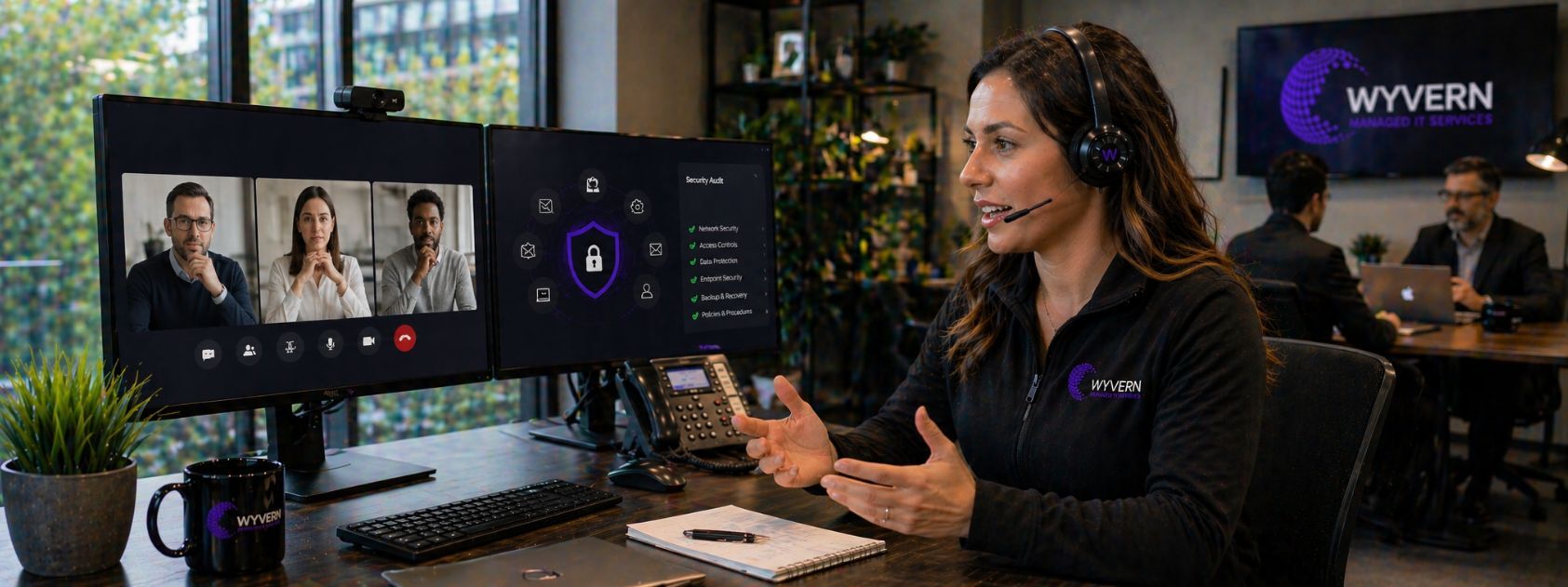
A spike in data leaving your network, particularly outside of business hours, can indicate that information is being exfiltrated. If your internet connection feels slower than usual for no obvious reason, it is worth asking whether something is transferring large volumes of data without your authorisation. This is a pattern our managed IT support team monitors continuously for clients across the West Midlands and Shropshire.
5. Staff Receiving Suspicious Emails or Unexpected Password Reset Notifications
A sudden increase in phishing emails targeting your team, or staff receiving password reset emails they did not request, can signal that an attacker is in reconnaissance mode, probing your organisation's edges before attempting a breach. Train your team to report these immediately rather than simply deleting them.
What to Do If You Spot These Warning Signs
Speed matters. If you identify any of the signs above, isolate affected devices from your network immediately where it is safe to do so, change passwords from a clean, unaffected device and contact your IT provider. Do not power off machines entirely before getting specialist advice, as this can destroy forensic evidence that helps establish what happened and how far the attacker got.
If you do not currently have an IT partner monitoring your systems, now is the time to address that gap. Our team at Wyvern Business Systems provides proactive monitoring, cyber security support and rapid incident response to businesses across Herefordshire, Worcestershire, the West Midlands, Shropshire and Gloucestershire. As one of our long-standing clients put it: 'WBS provides us with peace of mind that our IT needs are only a phone call away.'
Frequently Asked Questions
How do I know if my small business has been hacked?
Common indicators include unexpected account lockouts, devices running slowly without explanation, unfamiliar files or user accounts on your systems and unusual outbound network traffic. If you notice any combination of these, contact your IT provider immediately rather than assuming it is a coincidence.
What is the most common type of cyber attack on small businesses?
Phishing is consistently the most common entry point. Attackers send emails that appear to come from trusted sources (banks, suppliers or government bodies), to trick employees into clicking malicious links or handing over login credentials.
Should I pay a ransom if my business is hit by ransomware?
The NCSC and law enforcement agencies strongly advise against paying ransoms. Payment does not guarantee recovery of your data, and it directly funds criminal organisations. The priority is to isolate affected systems, report the incident and work with your IT provider to recover from clean backups.
Can cyber attacks be prevented entirely?
No security measure eliminates risk entirely, however the right combination of proactive monitoring, staff awareness training, patched software and tested backups dramatically reduces both the likelihood of a successful attack and the damage if one occurs.
Talk to Wyvern Business Systems About Your Cyber Security
Recognising the 5 signs your SME might be under a cyber attack is a critical first step, but detection alone is not a strategy. Your business needs a partner who monitors your systems continuously, responds quickly and helps you build the resilience to recover if the worst happens.
Wyvern Business Systems has supported SMEs across the region for over 30 years. Our managed IT services include proactive cyber security monitoring, threat response and practical advice tailored to businesses like yours and delivered by a team you can actually pick up the phone to.
Call us today for a no-obligation discussion about your IT and cyber security requirements. We will give you a straight-talking assessment of where your risks are and what you can do about them.
Subscribe by email
You May Also Like
These Related Stories

Top 10 Signs of Office Injuries Due to Poor Ergonomics

Windows 10 End Of Life: What Your Business Needs To Know
No Comments Yet
Let us know what you think